
Why Austria and the DACH Region Matter for Israeli Technology
08/08/2026
A Neutral Country Rearms
For most of the postwar era, Austria's constitutional neutrality made it one of Europe's smallest defense spenders. That era is closing. Vienna has approved successive double-digit increases to its defense ministry budget and is on a trajectory to nearly double annual defense spending within a few years, with a formal commitment to reach 2% of GDP. This is not a temporary reaction to a single crisis; it is a structural policy shift, codified in the government's long-term modernization framework and backed by cross-party budget commitments that survived a change in coalition.
For defense technology providers, the signal matters more than the number. A country that spent decades avoiding defense procurement conversations is now running one of Europe's most active modernization programs, and it is doing so largely from a standing start, with limited legacy vendor relationships to protect.
From Sky Shield to Sovereign Capability
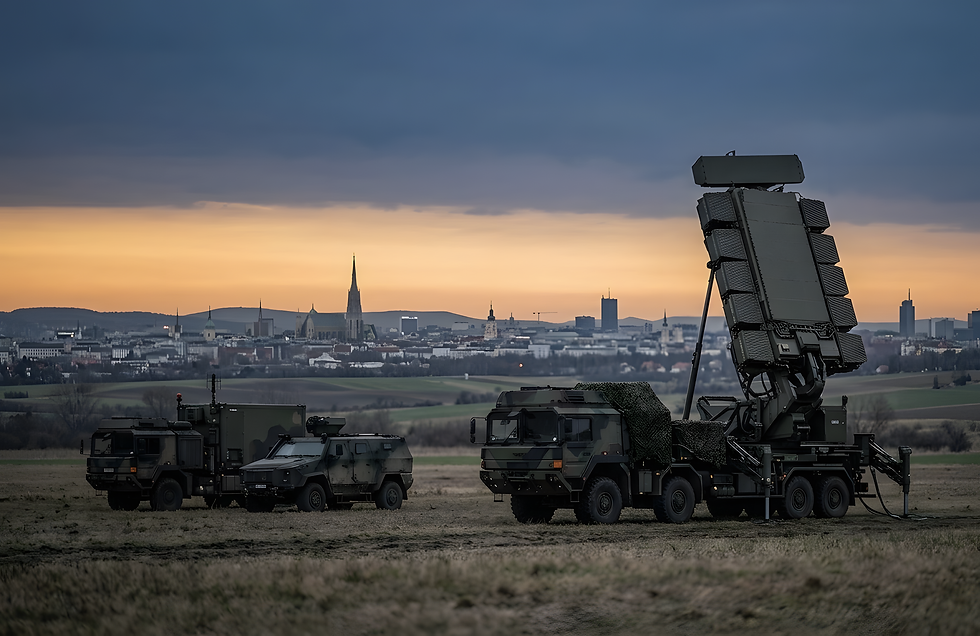
Austria's rearmament is anchored in the European Sky Shield Initiative, the German-led multinational air defense program it joined despite domestic debate over neutrality. Vienna has committed funding through the next decade for layered air defense short-range systems already contracted, medium-range missile defense in procurement, and an unresolved long-range decision that remains one of the most closely watched defense contracts in Central Europe.
But air defense is only the visible layer. Underneath it sits a broader modernization plan covering infrastructure, training systems, and, critically for dual-use and homeland security providers, the surveillance, border, and cyber-resilience capabilities that don't make headlines but absorb a growing share of procurement budgets every year.
Why DACH Is a Different Kind of Market
Austria, Germany, and Switzerland are not the Baltic states or the Balkans, and treating them the same way is a mistake we see often. Three differences matter for anyone building a go-to-market approach:
- Procurement discipline. DACH buyers run longer evaluation cycles, weight compliance and certification heavily, and rarely reward speed over process. Relationships are built before tenders open, not during them.
- Neutrality as a filter, not a wall. Austria's neutrality shapes how it buys, not whether it buys. Vienna procures NATO-interoperable equipment through the Partnership for Peace framework specifically so its systems work with neighboring forces, which means combat-proven, interoperability-tested technology has a real advantage over lab-certified alternatives.
- Industrial cooperation expectations. Austria's government has revived formal offset and industrial-cooperation mechanisms, meaning foreign suppliers are increasingly expected to bring local partnership, technology transfer, or co-production, not just a product catalog.
Where Israeli Technology Fits
Israeli defense and dual-use providers are well positioned for exactly this kind of market: combat-proven systems, a track record of technology transfer partnerships, and increasingly relevant in Vienna direct interoperability with the same allied systems Austria is now committing budget to integrate. The fit shows up across sectors already active in the region: air and border surveillance, cyber resilience for critical infrastructure, and homeland security technology for a country whose security posture is shifting from static neutrality to active, if independent, participation in European defense architecture.
The opportunity is time-limited in one important sense. Austria's own trade and industry bodies are actively soliciting foreign defense partners under its new industrial-cooperation task force, which means the field of interested suppliers is only going to get more crowded from here.
Tel Aviv Capital's Central European Presence
Tel Aviv Capital established a Central European Regional Presence in Vienna. This gives Tel Aviv Capital direct, on-the-ground positioning in a market most Israeli exporters are still approaching from a distance at the point in Austria's procurement cycle where relationship-building matters most.
What Comes Next