top of page

Unit 8200 and the Israeli Cyber Ecosystem: What It Means for Government Procurement
01/06/2026
When government procurement authorities evaluate cybersecurity capabilities, they are making a judgment about something that is fundamentally difficult to assess from the outside: whether a technology has been built by people who understand the adversary they are defending against. Certifications, compliance frameworks, and laboratory test results answer a different question. They tell you whether a system meets a defined standard. They do not tell you whether the people who built it have ever sat across the table from a nation-state threat actor and been responsible for the outcome.
In the Israeli cyber ecosystem, that experience is not exceptional. It is structural.
What Unit 8200 Is
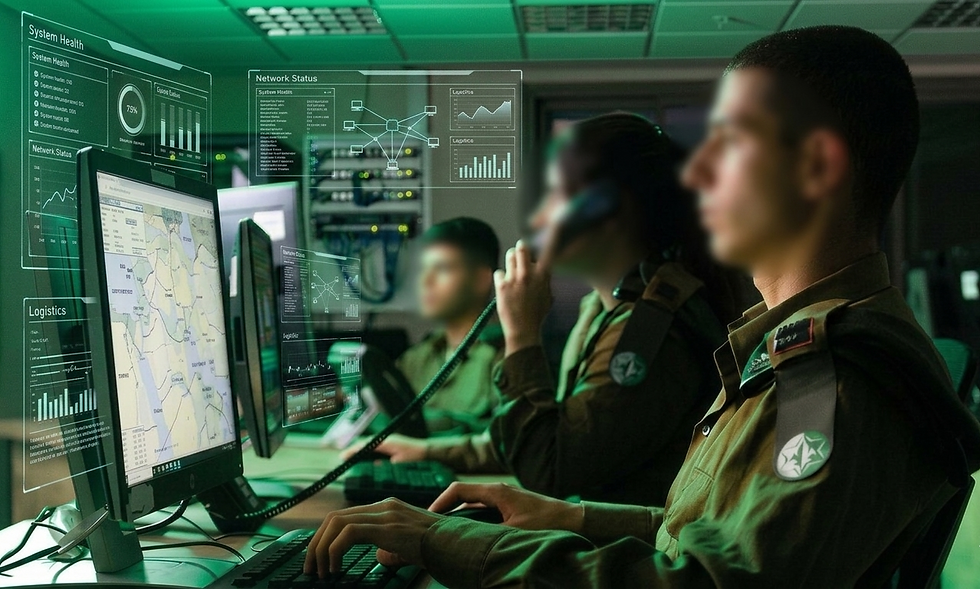
Unit 8200 is the signals intelligence and cyber operations unit of the Israel Defense Forces. It is the largest unit in the IDF and is responsible for signal collection, intelligence production, and cyber operations across the full spectrum of Israel’s national security requirements.
The comparison that is most frequently made is to the NSA in the United States or GCHQ in the United Kingdom. The comparison is reasonable in terms of mission scope but understates a specific difference: the operational tempo at which Unit 8200 operates. Israel’s threat environment does not produce periodic crises punctuated by long intervals of routine monitoring. It produces continuous operational pressure across multiple adversarial actors simultaneously, in a region where the consequences of intelligence failure are immediate and measurable.
This means that the professionals who serve in Unit 8200 are typically recruited in their late teens through a rigorous selection process that identifies mathematical, analytical, and technical talent at the national level spend their formative professional years operating in one of the most demanding intelligence and cyber environments in the world. They are not trained on simulations. They are trained on operations.
The Talent Pipeline and What It Produces
The Israeli mandatory military service system, combined with Unit 8200’s selection processes, creates a talent pipeline that has no direct equivalent anywhere else in the world.
Young Israelis identified as having exceptional technical aptitude are recruited into Unit 8200 before completing high school. They spend three to five years, the most formative years of their professional development, working on real intelligence and cyber operations problems, using capabilities that no civilian organization and few other government agencies have access to, against adversaries who are actively attempting to defeat them.
When they complete their service and enter the civilian economy, typically in their early to mid-twenties, they carry with them a combination of technical depth, operational experience, and adversarial understanding that takes most cybersecurity professionals a decade or more of civilian career to approximate, if they ever do.
The result is a concentration of elite cyber talent in the Israeli civilian economy that is disproportionate to the country’s size by any measure. This talent has built Israel’s cyber industry, and the industry reflects its origins.
From Military Capability to Commercial Technology
The translation of Unit 8200 experience into commercial cyber technology is not accidental. It is a deliberate feature of the Israeli defense ecosystem, supported by government policy, venture capital infrastructure, and an entrepreneurial culture that treats the transition from military to commercial as a natural career progression rather than an unusual one.
The pattern is consistent across the Israeli cyber industry. A team of Unit 8200 veterans identifies a capability gap, something they encountered operationally that no existing commercial solution addresses adequately. They built a company around solving that problem. The solution they develop reflects their operational experience: it is designed to work against sophisticated adversaries, under real conditions, at scale.
The resulting technologies are not adapted versions of commercial products with a defense veneer. They are built from the ground up by people whose reference point is operational performance against nation-state threats, not compliance with commercial security standards.
This distinction is significant for government procurement authorities. The cybersecurity market is large, crowded, and heavily marketed. The difference between a product built to pass certification tests and a product built to defeat sophisticated adversaries is not always visible in a procurement evaluation. The Unit 8200 lineage of Israeli cyber technology is one of the most reliable signals available that the technology was built for the latter purpose.
The Adversarial Context That Shaped Israeli Cyber Capability
Israeli cyber technology has been shaped by a specific adversarial context that is directly relevant to the threat environments facing governments in Europe and Latin America.
Russia and Iran are the two nation-state adversaries whose cyber capabilities have most directly influenced the development of Israeli cyber defense technology. Both operate sophisticated offensive cyber programs. Both have demonstrated the ability to conduct sustained, multi-vector cyber operations against critical national infrastructure. Both use cyber as an integrated component of broader hybrid warfare strategies that combine information operations, electronic warfare, and physical domain activity.
For governments in the Baltic-Nordic region facing the Russian cyber threat, the relevance of this context is direct. Israeli cyber defense technology has been developed and validated against the same toolsets, the same operational methodologies, and the same strategic objectives that Russian cyber operations direct at NATO’s eastern flank. The detection signatures, the behavioral analytics, and the response architectures embedded in Israeli cyber solutions reflect operational experience with the specific adversary that Baltic defense establishments are defending against.
For governments in Latin America and the Balkans facing state-sponsored cyber threats and sophisticated criminal actors who operate with nation-state-level capabilities, the same logic applies. Technologies built to defeat advanced persistent threats developed by nation-state adversaries are not over-specified for these environments. They are appropriately specified.
Digital Sovereignty Beyond Cybersecurity
One of the most significant shifts in government thinking about cyber capability over the past decade is the move from cybersecurity protecting systems from attack to digital sovereignty, maintaining independent control over critical national digital infrastructure regardless of the actions of foreign governments, commercial providers, or adversarial actors.
This shift reflects a recognition that dependence on foreign technology, foreign cloud infrastructure, and foreign communication systems creates vulnerabilities that are not purely technical. A government whose critical systems run on infrastructure controlled by a foreign commercial entity has, in effect, ceded a degree of sovereignty that conventional security measures cannot fully recover.
Israeli cyber technology addresses digital sovereignty as a design principle rather than an afterthought. The experience of operating in an environment where foreign technology dependency is a recognized security vulnerability, where the assumption that any system could be compromised or denied must be incorporated into operational planning, has produced a technology ecosystem that treats sovereignty as a core requirement.
For governments seeking to build or maintain genuinely independent digital infrastructure communications systems that cannot be disrupted by a foreign government’s decision, data environments that cannot be accessed by a foreign commercial entity under legal compulsion, and intelligence systems that do not route through third-party infrastructure, Israeli technology offers solutions that have been built around this requirement from the design stage.
Incident Response: The Operational Dimension
One dimension of Israeli cyber capability that is frequently underweighted in procurement evaluations is incident response what happens when a defense fails, and an adversary is inside a network.
The ability to detect a breach, understand its scope, contain its spread, attribute it with sufficient confidence for a response decision, and recover operational capability in an acceptable timeframe is a set of competencies that is distinct from prevention. Prevention is about keeping adversaries out. Incident response is about what you do when they get in, and against sophisticated nation-state adversaries, assuming they will get in at some point is the operationally realistic planning assumption.
Israeli cyber professionals have conducted incident response operations in environments where the attacker was a nation-state, the stakes were national security, and the timeframe for response was compressed by operational requirements. The methodologies, tools, and organizational approaches that Israeli cyber companies bring to incident response reflect this experience. They are not built around the assumption that breaches are rare events requiring extended forensic investigation. They are built around the assumption that breaches will occur, that the adversary will be sophisticated, and that the operational clock will be running.
For government procurement authorities building cyber defense capability that includes a realistic incident response component, this operational depth is a material differentiator.
What Unit 8200 Lineage Means in Practice for Procurement
The practical implications of Unit 8200 lineage for government procurement decisions are specific.
It means that the threat modeling underlying the technology has been conducted by people with direct operational knowledge of the adversaries the technology is designed to defend against, not by analysts working from open-source intelligence or red team exercises.
It means that the detection and response capabilities embedded in the technology have been developed against actual attack methodologies, not theoretical threat models. When a behavioral analytics engine in an Israeli cyber solution flags an anomaly, the patterns it is looking for have been derived from operational experience with real attacks.
It means that the people behind the technology understand the difference between a system that performs in a controlled environment and a system that performs under adversarial conditions because they have been professionally responsible for that difference.
And it means that the technology has been built by people whose professional formation occurred in an environment where failure had consequences. The culture of operational accountability that Unit 8200 instills in its veterans carries through into the companies they build and the products those companies develop.
None of this is a guarantee of any specific product’s performance. Technology evaluation must still be conducted rigorously. But in a market where the gap between marketing claims and operational reality is wide, Unit 8200 lineage is one of the most meaningful signals a procurement authority has access to.
Tel Aviv Capital and the Israeli Cyber Ecosystem
Tel Aviv Capital’s representation in the cyber and digital sovereignty domain draws directly on the Israeli cyber ecosystem described above. The technologies in our portfolio have been developed by companies whose founding teams and technical leadership carry Unit 8200 and related intelligence community experience. They have been validated at TRL-9 in operational environments. And they address the specific requirements of cyber defense, digital sovereignty, incident response, and signals intelligence that government procurement authorities in our regions of operation have identified as priorities.
Every engagement proceeds under DECA licensing and Israeli Ministry of Defense oversight. For procurement authorities in the Baltic-Nordic states, Balkans, and Latin America seeking cyber capabilities that have been built for the adversarial environments they actually face, we provide direct access to the Israeli cyber ecosystem without intermediaries, without agents, and without the uncertainty about provenance and authorization that unregulated access creates.
The Israeli cyber advantage is real. It is operational. And it is accessible through the right channel.
Government procurement authorities seeking Israeli cyber defense and digital sovereignty capabilities are invited to contact Tel Aviv Capital directly. All engagements are conducted under NDA and in full compliance with DECA licensing requirements.
bottom of page